Understanding your child's symptoms starts here.







When something feels off with your child and you haven't been able to get clear answers, it's easy to feel stuck.
What's often overlooked is how breathing and jaw development can quietly shape a child's health, growth, and daily behavior. For many families, it's the missing piece behind the symptoms no one has been able to explain. Once you see the connection, everything starts to make more sense.
Learn more about the symptoms of airway issues.
When the airway doesn't have enough space, the body has to work harder to do simple things—like breathe and sleep. Over time, this can lead to a wide range of symptoms. Some are obvious. Others are harder to connect. But they all matter.
MOUTH BREATHING
My child always breathes through their mouth!
Your child rarely keeps their lips closed, especially during sleep. Mouth breathing often happens when the nose is blocked or the jaws are too small. Over time, this can affect how the face and airway develop.
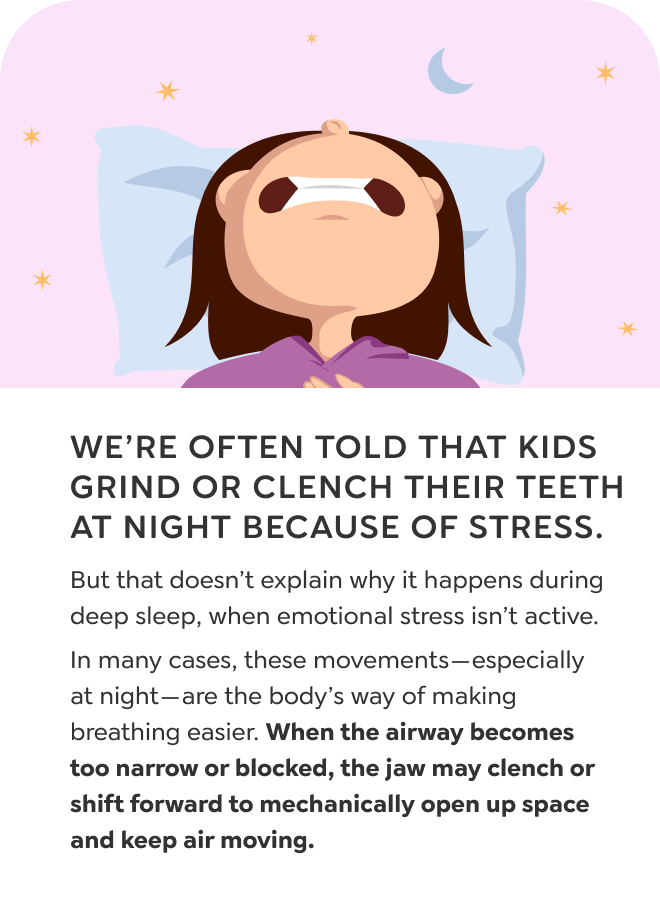
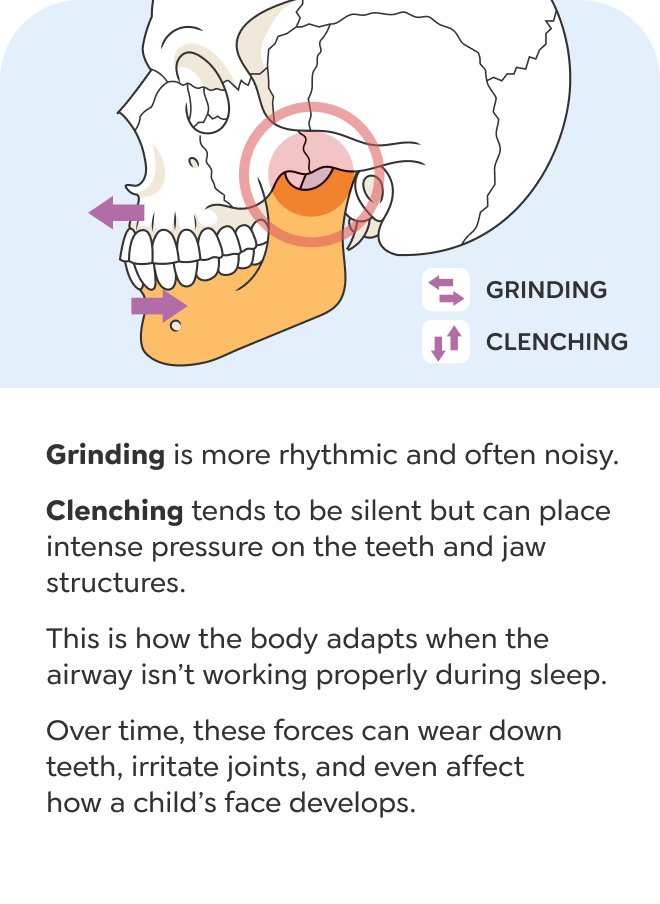
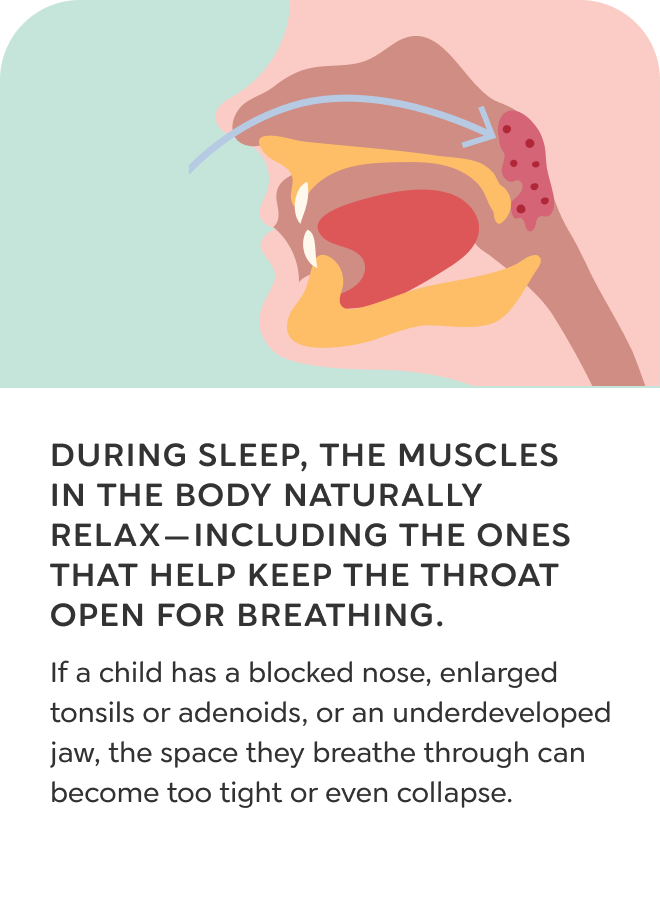
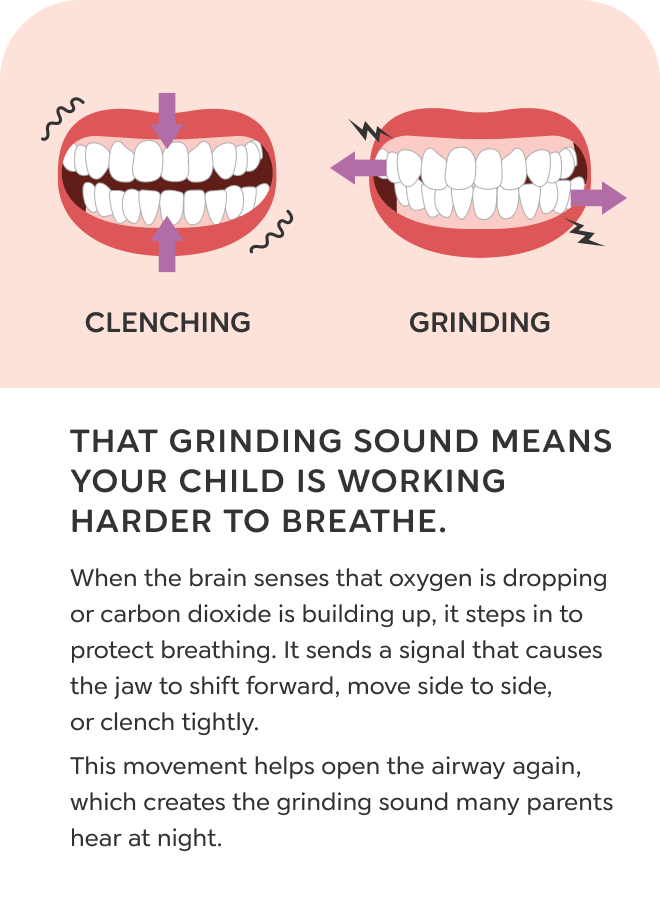
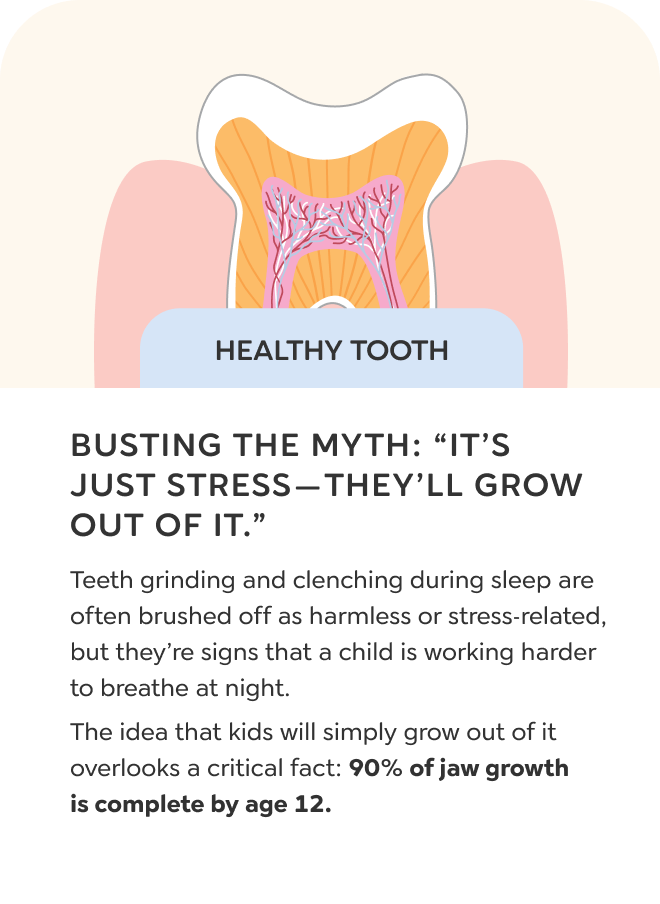
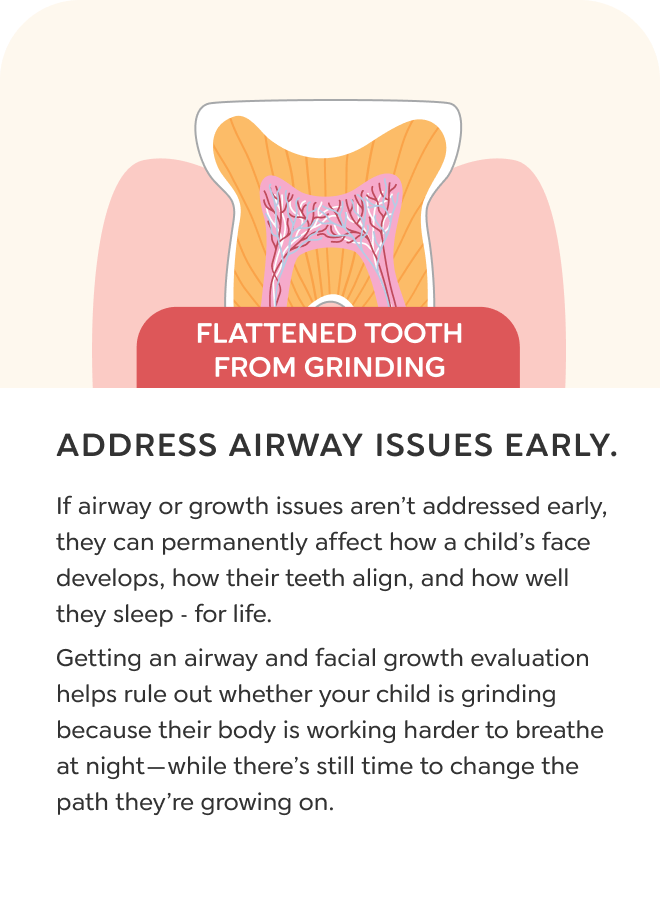
Mouth Breathing
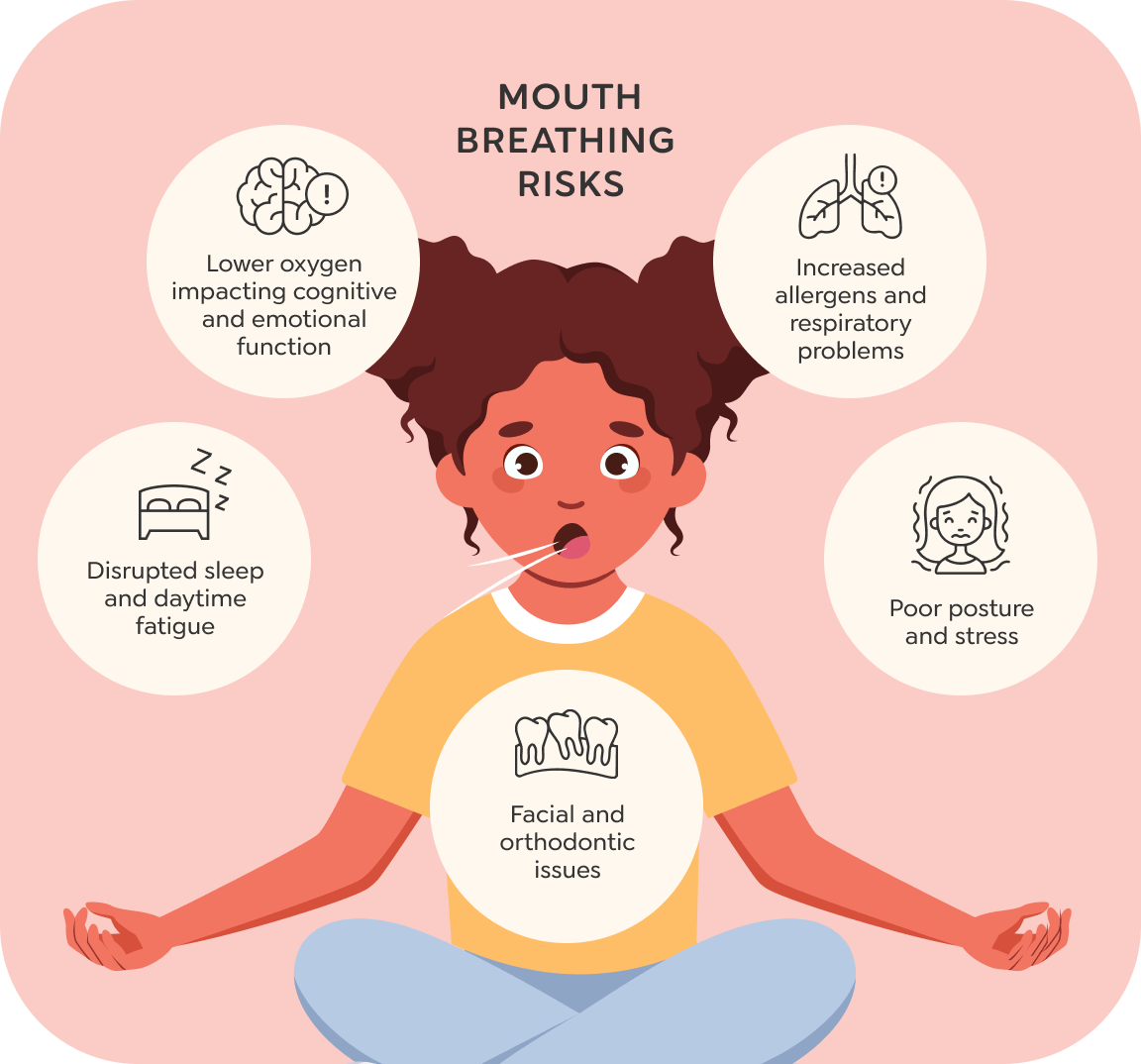
Mouth breathing happens when a child cannot get enough air through their nose. It is a physical compensation, usually caused by underdeveloped jaws, enlarged tissues, or chronic congestion that makes nasal breathing difficult. The lips separate, the tongue drops low, and air enters through the mouth instead of the nose.
Over time, this shift changes how the face grows. The tongue no longer supports the roof of the mouth, so the palate narrows, the upper jaw stays small, and the airway becomes more restricted. Children who breathe through the mouth are more likely to develop fatigue, poor focus, dry lips, bad breath, and symptoms that resemble ADHD or behavioral disorders.
The impact depends on how often it happens. A child who mouth breathes occasionally may show mild symptoms. A child who mouth breathes during both the day and night often experiences more serious effects on sleep, growth, and development. To correct it, the underlying reason for nasal obstruction needs to be identified and addressed.

An evaluation by an airway-focused dentist ensures accurate assessment and targeted support for your child's breathing and developmental needs.
If this is important, why hasn't my doctor mentioned it?
Most medical and dental professionals have not received specialized training in airway or jaw development may need support.
airway-related symptoms are frequently advised to "wait and see," delaying proper intervention.
What happens during sleep?

During deep sleep, your child’s tongue should rest against the roof of the mouth, helping keep the airway open. But
when the jaw is underdeveloped, the tongue falls backward, shrinking the airway and leading to disrupted breathing.
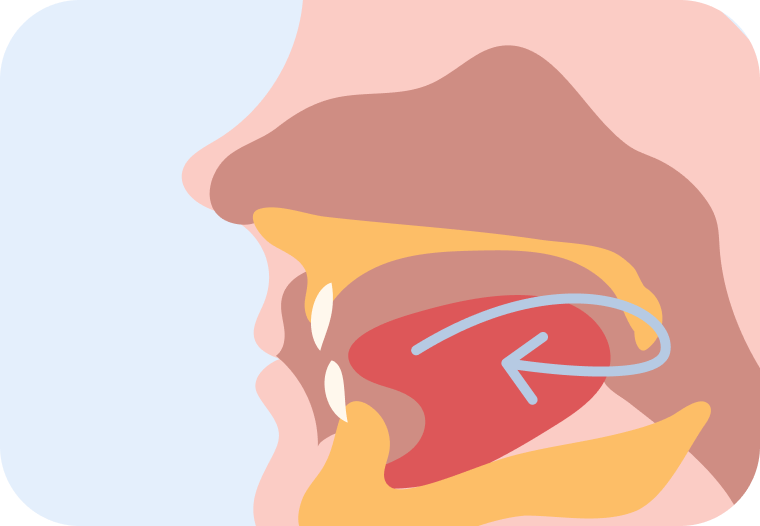
Underdeveloped Jaw,
Tongue Falls Back
When the jaw doesn’t grow forward enough, the tongue has nowhere to rest but back—shrinking the airway.

Mouth Opens,
Mouth Breathing Begins
The airway can’t stay open on its own—so the mouth opens to compensate, and mouth breathing takes over.
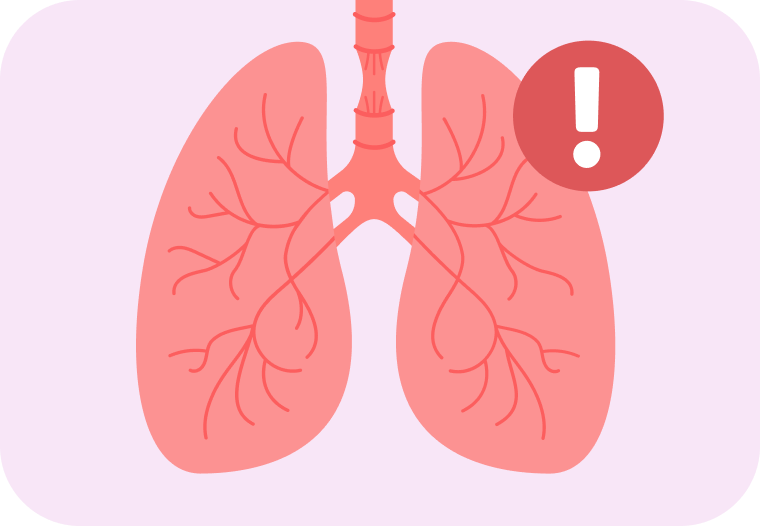
Disrupted Oxygen,
Poor Sleep Quality
With reduced oxygen and broken sleep cycles, kids may snore, toss and turn, or wake up tired—even after a full night in bed.
The roof of your child's mouth is also the floor of their nasal cavity.
Normal jaw growth
 Tongue rests on palate
- Wide palate and nasal space
- Clear airway and restful sleep
Underdeveloped jaw
 Tongue drops or falls back
- High, narrow palate reduces space
- Snoring, congestion, tired mornings
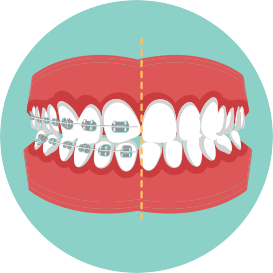
Explore how early airway intervention reduces the need for future orthodontics.
Help My Child Avoid Braces
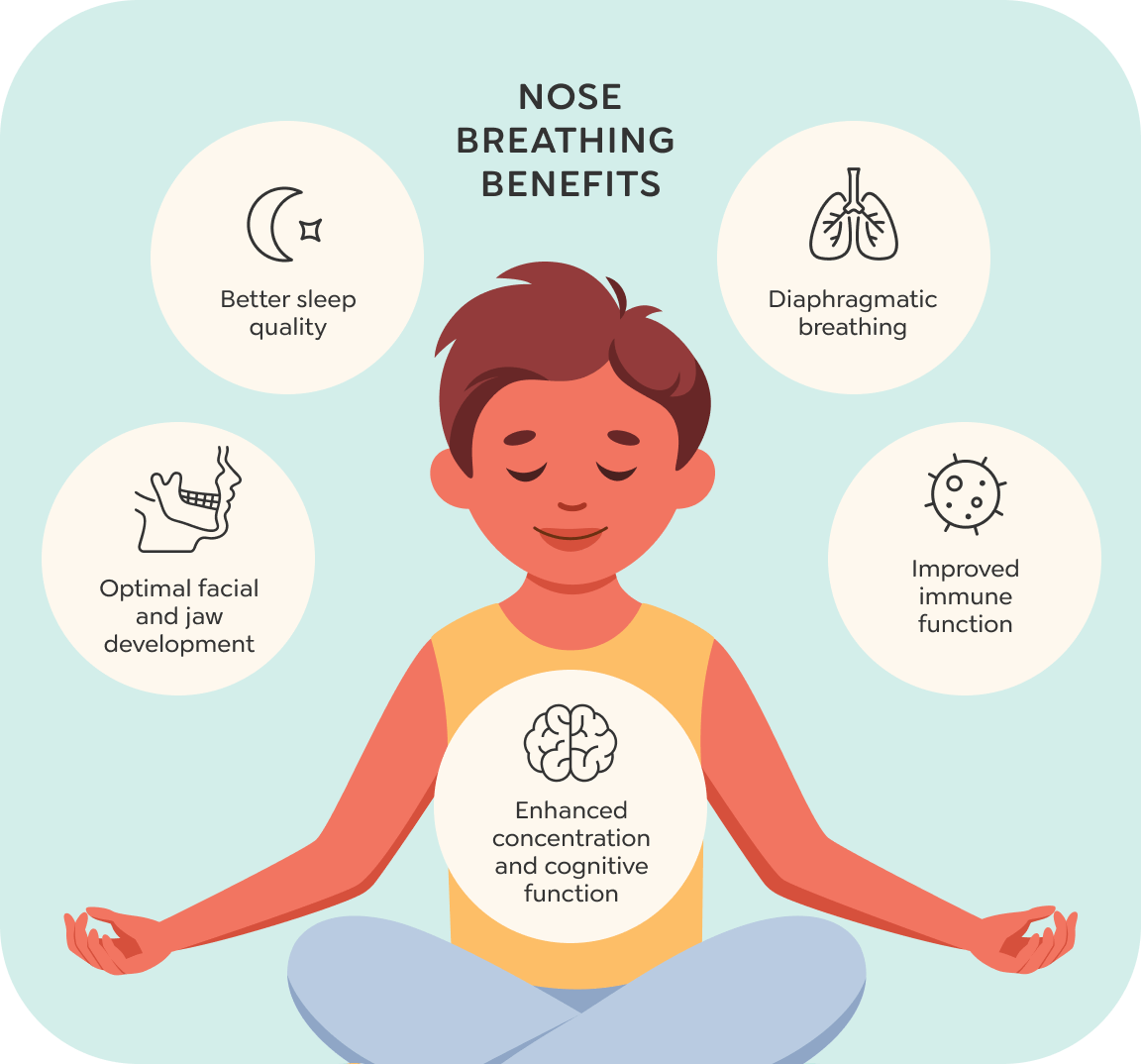
How should a child breathe?
Children should breathe primarily through their noses. Nasal breathing filters air, optimizes oxygen absorption, and supports ideal facial growth.
Everyday struggles could be signs of an airway issue.
If your child shows even one of these signs, our free virtual assessment can help clarify what's going on—and how to support their growth and breathing.
Real stories from families just like yours.
When answers felt out of reach, these parents kept searching. Their children were facing persistent symptoms—trouble sleeping, focus issues, emotional ups and downs—and no one had been able to explain why. Once they discovered how airway health was involved, everything began to change. These stories highlight what's possible when parents get the right kind of answers and support.
The Toothpillow Program
Helping Kids Breathe, Sleep, and Grow the Way They Were Meant To.
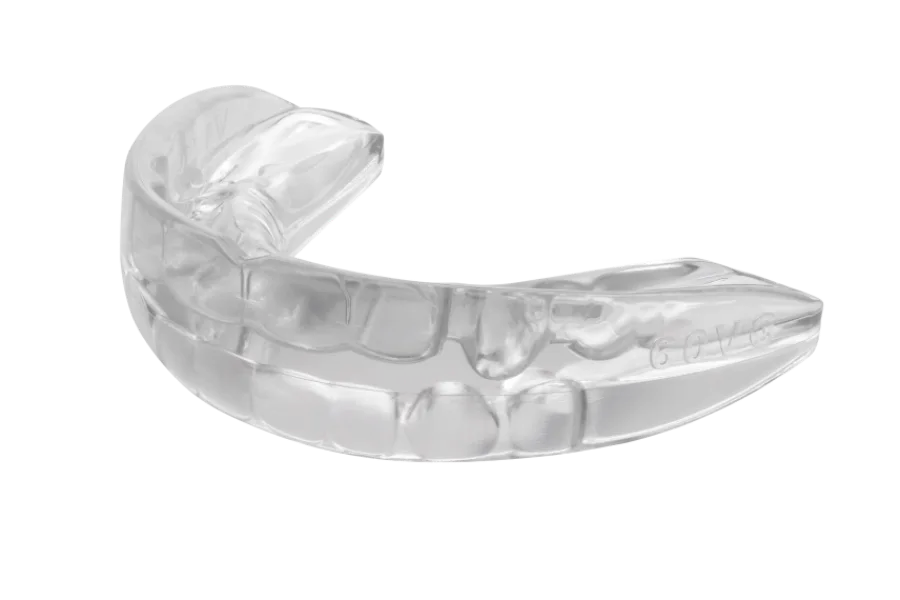
Toothpillow is a dentist-guided airway program that helps your child grow in a way that supports better breathing, deeper sleep, and healthier development—without surgery or traditional braces. Proactive and family-friendly, it addresses root causes like jaw growth, tongue posture, and nasal breathing instead of just masking symptoms.
Learn more about the Toothpillow program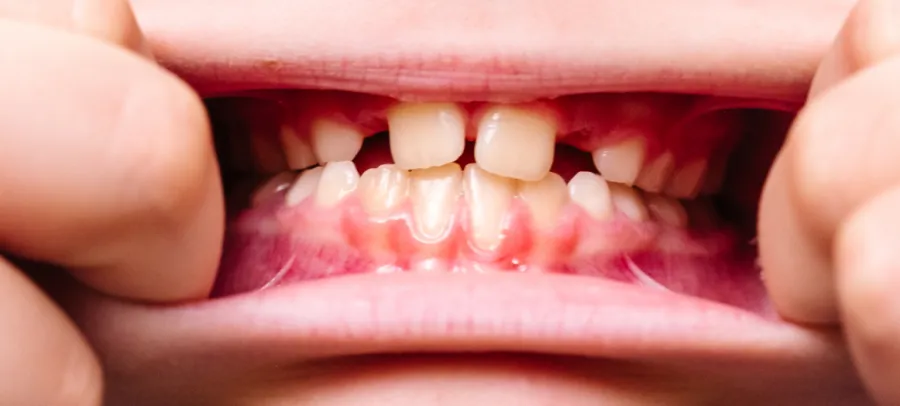
Free Virtual Assessment
Expert evaluation of airway and jaw health.

Customized Treatment Plan
Personalized structured plan.

At-Home Appliance Use and Therapy
Easy-to-follow exercises and tools.

Ongoing Expert Support
Continuous guidance and monitoring.
What you'll learn from
the assessment:
Is your child’s jaw developing properly?
Could breathing be affecting their sleep or focus?
Are their symptoms related to airway restriction?
What next steps make sense for your child’s needs?

Take the first step:
You don't have to guess anymore. Let an expert look deeper and help you understand what's really going on.
It's free. It's easy. It's virtual.

What happens when the right support finally shows up.
Sometimes the hardest part is not knowing where to turn. These parents had questions no one could answer—until they learned how breathing and jaw development were affecting their child's sleep, behavior, and health.
Watch their stories and see what changed once they found the right kind of help.

If you've been looking for answers, this is where to start.
If your child's symptoms haven't made sense until now, this is your chance to understand what's really going on. A free virtual assessment will help uncover what's been missed—and what you can do about it.
Still have questions? We've got you.

FAQs
Know what to expect.
From timelines to treatment steps, get clear answers to the most common questions families ask before getting started.
Explore FAQs
Inside the program
Understand the full process.
Discover what makes this program different—and why families choose it to support their child's development from home.
See how it works
Meet the doctors
Get to know the team.
Every family is paired with a licensed airway dentist who's trained to spot what others often miss. Meet the experts guiding your child's growth.
Meet the team